
When “High Protein” Stops Being Healthy
The Protein Craze Has Gone Too Far! Let’s clear something up: Just because something has added protein does not automatically make it healthy...
6/6/20262 min read
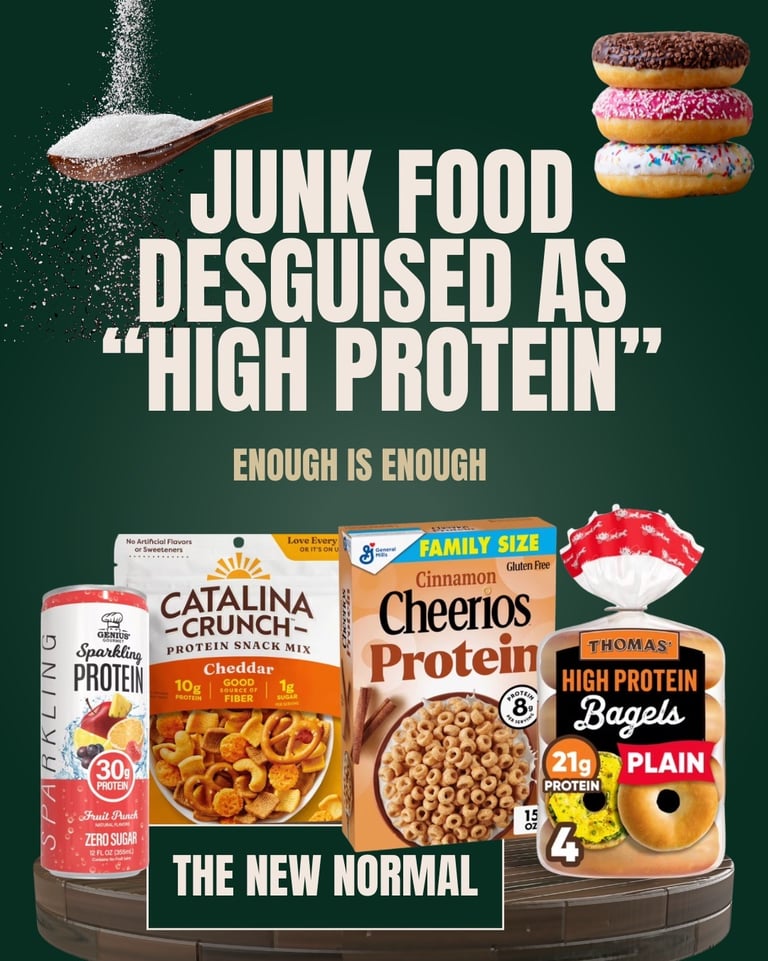
“Junk Food Disguised as Protein” Is One of the Biggest Traps in Health Right Now
“High protein” has officially become the new “low fat.”
Years ago, grocery store shelves were filled with “low-fat” foods that were actually loaded with sugar, preservatives, and highly processed ingredients. People were eating more carbs, less fiber, and more artificial ingredients — all while obesity rates continued to climb.
Now we’re seeing the same thing happen with protein.
Protein is one of the most important macronutrients for building and maintaining muscle, supporting metabolism, improving recovery, and increasing satiety. You should absolutely be eating enough protein daily. But that does not mean every food labeled “high protein” is healthy. Many of these products are still ultra-processed junk foods — just with protein added in.
What “Junk Protein” Usually Looks Like:
These foods market protein aggressively but are still highly processed, low satiety, and easy to overeat:
Protein bars that taste like candy
“High-protein” cookies, brownies, and donuts
Protein cereals loaded with sugar alcohols
Flavored yogurts with more sugar than protein
Protein chips and puffs with long ingredient lists
Frozen “fitness” meals packed with sodium and additives
Just because something has protein added to it doesn’t automatically make it nutritious.
What to Look for on Labels:
If you’re trying to make better choices, start paying attention to more than just the protein number on the front of the package.
Protein vs. Calories Imbalance:
10 grams of protein for 250+ calories is usually not a great return.
Sugar Alcohol Overload:
Ingredients like erythritol, maltitol, and sorbitol can contribute to bloating, digestive issues, and increased cravings in some people.
Long Ingredient Lists:
If the ingredient list reads like a chemistry experiment, it’s probably not a whole food.
Low Fiber + Low Volume:
These foods often don’t keep you full the way minimally processed whole foods do.
Why It Matters
A lot of these “health foods” are designed to be hyper-palatable, meaning they’re engineered to make you want more.
Over time, they can:
Keep you stuck in a craving cycle
Leave you less satisfied than whole foods
Stall fat loss despite “hitting protein”
Replace more nutrient-dense options in your diet
Negatively impact gut health and inflammation
Foods labeled “sugar-free,” “fat-free,” or “high protein” are not automatically healthy. Many still contain highly processed ingredients that can leave you chasing cravings and feeling unsatisfied.
A Better Approach: Protein-First, Not Protein-Labeled:
Instead of chasing protein marketing, focus on foods that naturally contain protein:
Eggs and egg whites
Chicken, turkey, and lean beef
Greek yogurt and cottage cheese
Fish and seafood
Tofu and tempeh
Protein powders with simple ingredient lists
A protein bar or shake with quality ingredients from time to time is completely fine. Convenience foods can absolutely have a place. But they should supplement your nutrition — not replace real food. Whole foods provide the vitamins, minerals, fiber, and nutrients your body actually needs to feel good, recover well, and support long-term health.
Build your days around real meals. Prep ahead so you have easy options available. The more prepared you are, the less likely you are to rely on whatever is fast, convenient, and heavily marketed as “healthy.”