
Fat Loss vs. Weight Loss: Why the Scale Doesn’t Tell the Whole Story
You can lose weight without improving body composition, but fat loss improves health, strength, and long-term results—even if scale weight stays the same.
Madison DiCioccio
2/16/20262 min read
Fat Loss vs. Weight Loss: Why the Scale Doesn’t Tell the Whole Story
Have you ever stepped on the scale, seen the number drop, and still thought “Why don’t I look any different?”—you’re not alone. This is where understanding the difference between fat loss and weight loss really matters.
They’re often used interchangeably, but they are not the same thing—and understanding the difference can completely change how you approach your fitness goals.
What Is Weight Loss?
Weight loss simply means a decrease in total body weight. The scale does not distinguish what you’re losing—it just simply shows a number.
When you lose weight, that loss can come from:
Body fat
Muscle
Water
Glycogen (stored carbohydrates)
This is why rapid weight loss often happens at the start of a diet. Cutting calories or carbohydrates causes water and glycogen loss, making the scale drop quickly—without meaningful changes to body composition (the proportion of fat, muscle, bone, and water in the body).
The downside: losing muscle along with fat can:
Slow metabolism
Reduce strength
Make it harder to maintain results long-term.
What Is Fat Loss?
Fat loss refers specifically to a reduction in body fat while preserving—or even building—lean muscle mass.
With fat loss:
The scale may move slowly, stall, or not change at all
Clothing fits better
Strength improves
Muscle definition becomes more visible
Fat loss is achieved through a more strategic approach that includes strength training, adequate protein intake, and a sustainable calorie deficit.
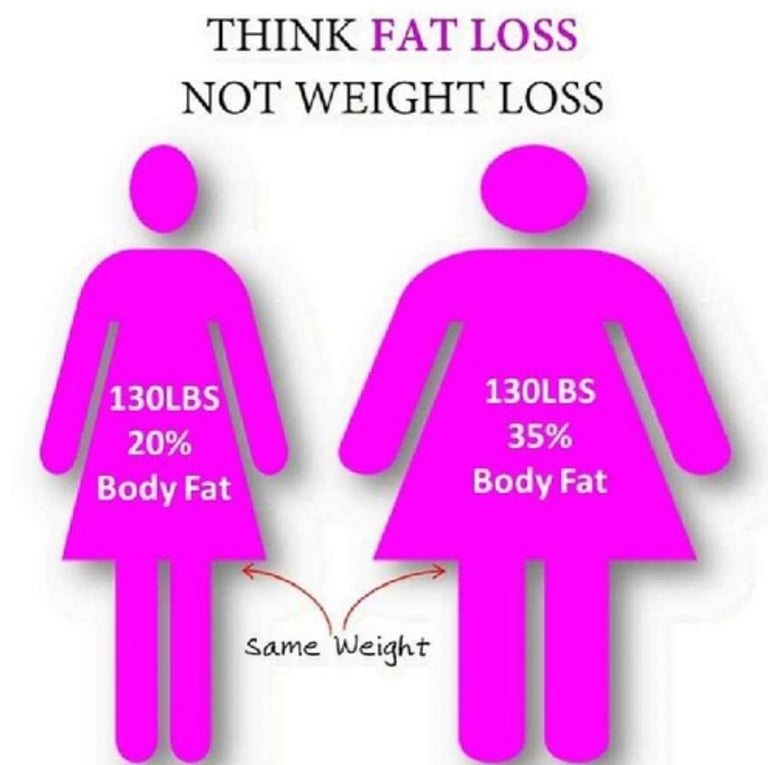
This is why someone can look leaner, stronger, and more athletic even if their scale weight stays the same.
Why the Scale Can Be Misleading
The scale doesn’t measure progress—it measures gravity.
You can:
Lose fat and gain muscle at the same time (scale stays the same)
Lose weight but mostly lose muscle and water (scale drops, body doesn’t change much)
That’s why relying only on scale weight often leads to frustration and premature quitting—even when real progress is happening.
Better indicators of progress include:
Progress photos
Body measurements
Strength and performance improvements
How clothes fit
Energy and recovery levels
Fat Loss vs. Weight Loss at a Glance
Weight Loss:
Focuses on scale weight
Includes muscle and water loss
Often short-term
Can slow metabolism
Fat Loss:
Focuses on body composition
Preserves lean muscle
Sustainable and performance-driven
Leads to a leaner, stronger physique
The Bottom Line
If your goal is simply to see a lower number on the scale, weight loss might get you there—but it often comes at a cost.
If your goal is to:
Look leaner
Get stronger
Improve performance
Maintain results long-term
Then fat loss is the goal worth chasing.
At Steel Yourself Athletics, we focus on building strength, preserving muscle, and unlocking your next level—not just shrinking a number on the scale.
Because the goal isn’t to weigh less.
It’s to be stronger, healthier, and harder to break